
Starting a Marquette Resident Search
Marquette does not keep one public roll of every household. The useful records are split between county land offices, the election system, courts, city departments, and historical collections. Begin with the question, not a broad name search. An owner question calls for the parcel record and the recorded deed. A current registration question belongs with the Michigan Voter Information Center. A past household question can be checked against a directory year, a census date, and a newspaper notice.
Each record needs a careful label. An assessed owner is not automatically an occupant, a voter match is not proof that someone is at an address today, and a court index is not the official case file. That distinction makes the Marquette residents directory useful for family research, reconnecting with old classmates, estate questions, and checking a record before relying on it.
- Write down the name, street address, or approximate year you already know.
- Use the county property route to obtain a parcel number and distinguish the property address from any tax mailing address.
- Use the Michigan voter lookup only for an appropriate current registration question, with its required name, birth-month, birth-year, and ZIP details.
- Check the Register of Deeds for a recorded party and the legal description behind a parcel.
- For an older household, compare a directory entry with the Peter White Public Library or Longyear collections, then request any missing public record from its custodian.
Marquette Resident Records Offices
Several offices around West Baraga Avenue hold the core modern record trail. The Register of Deeds records land instruments. The County Clerk is the local election and vital-record contact and serves Circuit Court functions. The City Clerk handles city records, elections, minutes, licenses, and municipal FOIA requests. Their records overlap in names, but each office keeps a different kind of proof.
Marquette County Register of Deeds
234 W. Baraga Avenue
Marquette, MI 49855
(906) 225-8415
Marquette County Clerk
Courthouse Annex, 234 W. Baraga Avenue
Marquette, MI 49855
(906) 225-8330
For street-by-street work, the Marquette street directory follows the parcel and deed chain in more detail. Requests for older land books, certified copies, or a record that never had an online index should go directly to the office that owns it.
Marquette Parcel Names and Addresses
The county’s BS&A public-search landing page offers Address, Name, and Parcel Number routes, along with tax, building-department, delinquent-tax, animal-license, and detailed-record categories. It is a strong place to start with a street number or an assessed owner. The county materials describe it as reference information, so a result should be checked with the municipality if an error matters.
| BS&A field | Type | Published use |
|---|---|---|
| Address | Text search | Search by situs or street address |
| Name | Text search | Search an owner, person, or business name |
| Parcel Number | Text search | Find the parcel key when known |
| Building department | Category | Reach permit and inspection records |
| ZIP | Not documented | Do not assume the county search accepts ZIP filtering |
A situs address identifies the property. A mailing address, when shown, identifies where tax correspondence goes. The parcel number and legal description are the better bridge to recorded land documents. Those differences prevent a property result from being mistaken for a current household list.
Note: The advertised county search keys are useful starting points, but the research did not verify a live Marquette parcel-card layout or every result field.
Marquette Voter Lookup Boundaries
The Michigan Voter Information Center provides a current registration route, not a browseable resident roster. Its name panel asks for first name, last name, birth month, birth year, and ZIP Code, followed by Search and Clear. Use the registration ZIP, rather than a ZIP inferred from a parcel, and treat a match as an election-status lead.
| Public route | MVIC name search |
|---|---|
| Required inputs | First name, last name, birth month, birth year, and ZIP Code |
| Withheld material | Driver-license or state-ID data, month/day of birth, phone data, and other protected identifiers |
| Full-file option | A separate Qualified Voter File request, with its own protected-field and delivery rules |
Michigan does not register voters by party. An inactive status also does not mean that a person never lived in Marquette. If an official record is needed, contact the County Clerk or City Clerk rather than trying to reconstruct protected fields from a search result.
Current Marquette Resident Directories
Current directory-like records each cover a narrow group. The property search ties names to assessed parcels. MVIC helps a person check current registration information. The deed index records parties to transfers. City staff and board pages identify people acting in official roles. None of those sources is a complete list of all Marquette residents, and each needs an access route suited to its purpose.
| Marquette source | What it can identify | Custodian | Access |
|---|---|---|---|
| BS&A parcel search | Assessed owner and parcel relationship | County Equalization | Address, name, or parcel route |
| MVIC | Current voter status question | Michigan Secretary of State | Required name and ZIP form |
| Recorded land index | Grantor and grantee parties | Register of Deeds | Public index and counter route |
| City staff directory | Current department contacts | City of Marquette | Current staff directory |
| Permit and license records | Existing address or application record | City or County office | Portal, counter, or narrow FOIA request |
The resident lookup page explains how to reconcile one name across those separate record types. A city license application or public board minute can be useful context, but it does not establish a private household address.
Marquette Deed Index Time Line
The Register of Deeds says its online deed index and images begin January 1, 1980. Mortgage and miscellaneous record coverage begins January 1, 1983. The earlier record books did not disappear, but they require an in-person visit or a request to the Register. This boundary matters when a current parcel trail suddenly stops online.
Start with a current owner or legal description, find the purchase instrument, and then read the seller as the next historical search name. Search both grantor and grantee roles. A deed can use a lot, block, or other legal description instead of a modern street number, which is why the parcel key is more reliable than a loose address search. The past residents route is designed for that backward chain.
Marquette Court Names Need Context
MiCOURT provides public name and case-number searching for Marquette Circuit Court C25, District Court D96, and Probate Court P52. The name panel uses a last name or business name, with first name, middle name, and birth year available to narrow the search. A displayed row can identify a case type, number, filing date, status, and disposition when those fields are public.
The portal is informational, not the official file. Adoption, juvenile, name-change, protection-order, will, and other protected categories are excluded, and case-specific restrictions can apply. Contact the relevant clerk for an official file or certified copy. A public case entry should never be used as proof of a person’s current address or the truth of an allegation.
Marquette Vital Records Have Access Rules
The County Clerk is a local registrar contact for Marquette events, while Michigan Vital Records issues statewide certified copies. Birth records less than 100 years old have eligibility rules. Death, marriage, and divorce certificate requests follow a different written-request and search-fee route. A certificate is also different from a court file, newspaper notice, or library index.
Michigan’s Public Health Code, including MCL 333.2882, MCL 333.2885, and MCL 333.2891, controls those distinctions. The archival transfer threshold in MCL 333.2885 is 75 years for death and marriage records and 110 years for birth records. Historical researchers can also use cemetery records, obituaries, directories, and the local historical collections as leads before seeking an eligible official copy.
Historical Marquette Resident Directories
Printed directories are the local bridge between a name and a past street. Peter White Public Library holds extant Marquette city and county directories from 1873 through 2005. The earliest run, 1873 through 1891, came from various local publishers; R.L. Polk & Co. appears from 1894 onward. The Marquette Regional History Center’s Longyear library also reports directory holdings from 1873 to the present.
A directory year can place a person or head of household at an address according to that edition’s conventions. It cannot prove a continuous stay, and some volumes have gaps or use different indexes. The city directories page covers the shelf, entry fields, and year-by-year method without treating a historical listing as a current one.
Marquette Library Records Extend the Search
The Peter White Public Library Local History Research Room links directories with maps, yearbooks, local indexes, genealogy resources, and Mining Journal files. Its microfilm run spans 1868 through 2019, and the digital run reaches from 1868 through February 1989. That combination is useful when an address appears in one directory year and needs a dated notice or obituary to explain a move.
The City’s FOIA instructions show the city-request route when an existing municipal record has no public online index.
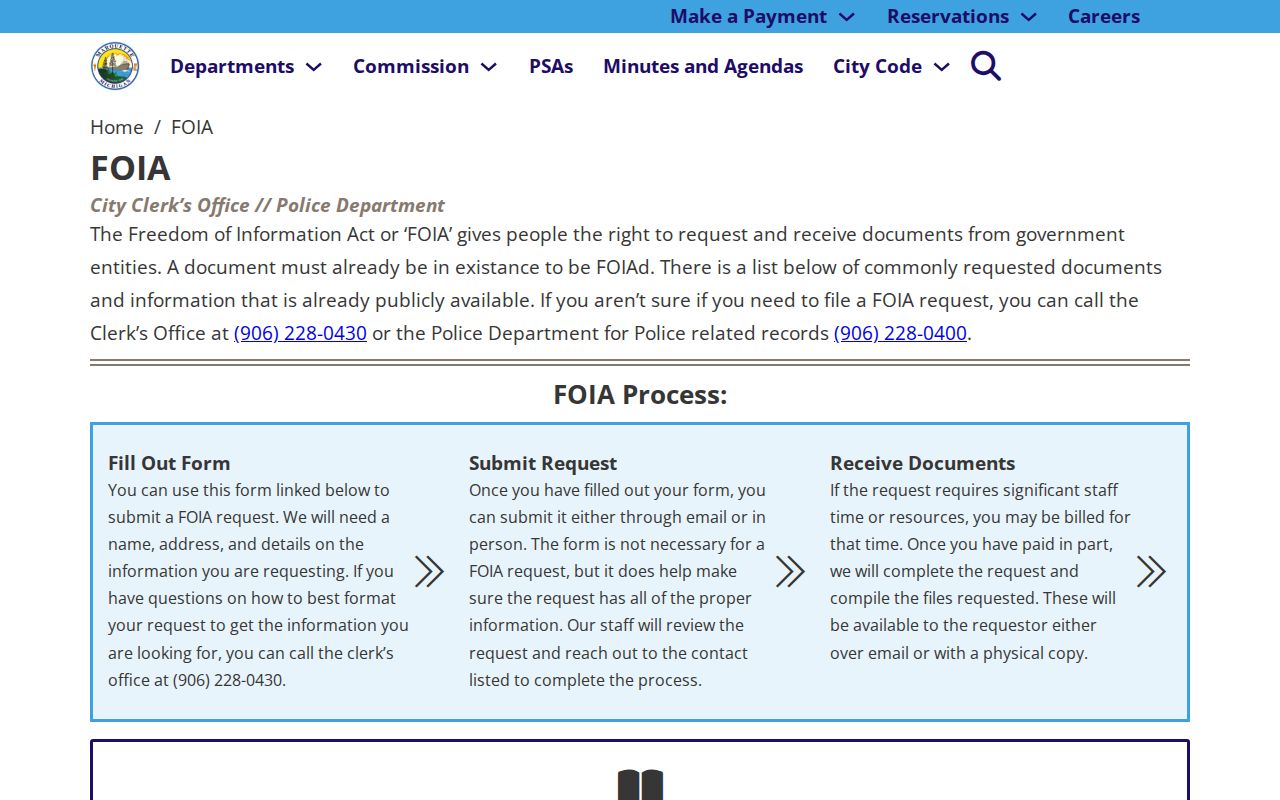
The captured instructions reinforce that a city record request should target an existing, described document and may be subject to exemptions and redaction.
Marquette’s Longyear Name File
The J.M. Longyear Research Library at the Marquette Regional History Center has a Biographical Card File of more than 80,000 names, drawing on birth, death, marriage, and anniversary accounts from 1868 to the present. It also holds directories, address-filed photographs, a Mining Journal residence index arranged by city and street, census microfilm, maps, cemetery material, and family collections. Research is by appointment or advance contact.
Those materials are strongest for a dated historical question. A card or newspaper reference is evidence of what the underlying item reported, not a certified vital record. Preserve the source title, date, page, and spelling variant when comparing it with a directory or deed trail.
Marquette’s historical shelf is still growing. The Historical Society of Michigan announced March 2026 digitization days at the Marquette Regional History Center and the Ishpeming Carnegie Public Library, with scans intended for Longyear digital collections. That announcement does not promise that a particular directory, photograph, or family paper is available online. It does make the history center’s catalog and finding aids worth checking again after a first search comes up empty. Keep the original date range and repository name in a research note, because an online scan can supplement a shelf call rather than replace it.
Marquette FOIA Requests Fill Gaps
Michigan FOIA, MCL 15.231 et seq., opens non-exempt existing records. A request should identify a real record set, names or an address, and a date range. The City says requests may be emailed or delivered in person. The statewide framework generally gives a public body five business days to respond, with a written extension of up to ten additional business days, and permits certain processing costs under MCL 15.234.
The county-linked BS&A route is a helpful online start, but a targeted request is the fallback when a permit, city file, or historic record is not exposed there.
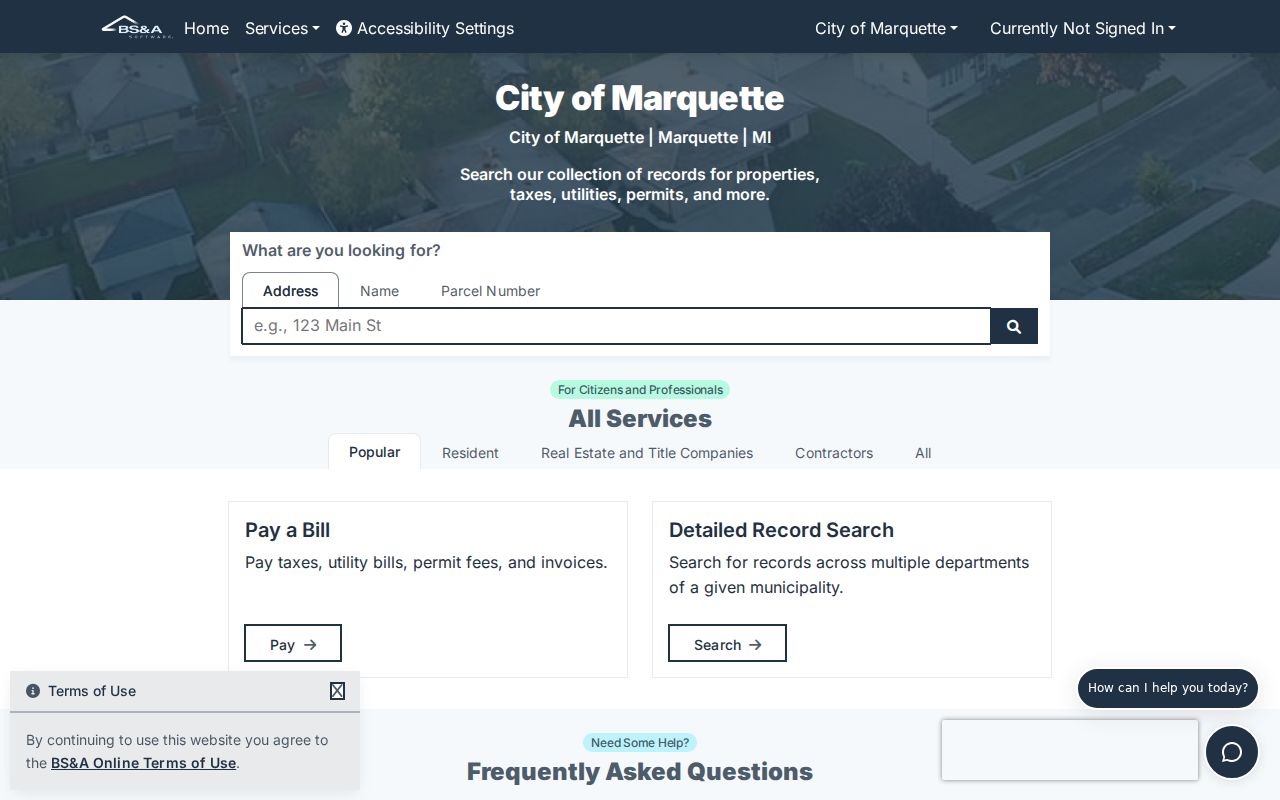
The captured property-search screen reinforces why an address, owner name, or parcel number should be recorded before asking an office for a narrower existing record.
Note: A request cannot require Marquette or Marquette County to create a new report, answer a research question, or release an exempt part of a record.
Marquette State Lookup Scope
State systems can answer specialized questions, but they do not merge into one Marquette residents directory. MDOC OTIS covers current prisoners, parolees, probationers, and people discharged from supervision within a limited period. It does not cover people held only in the county jail or awaiting sentence. The official jail page provides contact and service information, but no browser roster was located during research.
OTIS uses a last name or offender number and offers additional filters. Its own warning says it is not a positive identification system. Michigan also has distinct official routes for the public sex-offender registry, ICHAT criminal-history requests, professional licensing, business filings, and unclaimed property. Use the system’s stated scope before treating any result, or lack of a result, as meaningful.
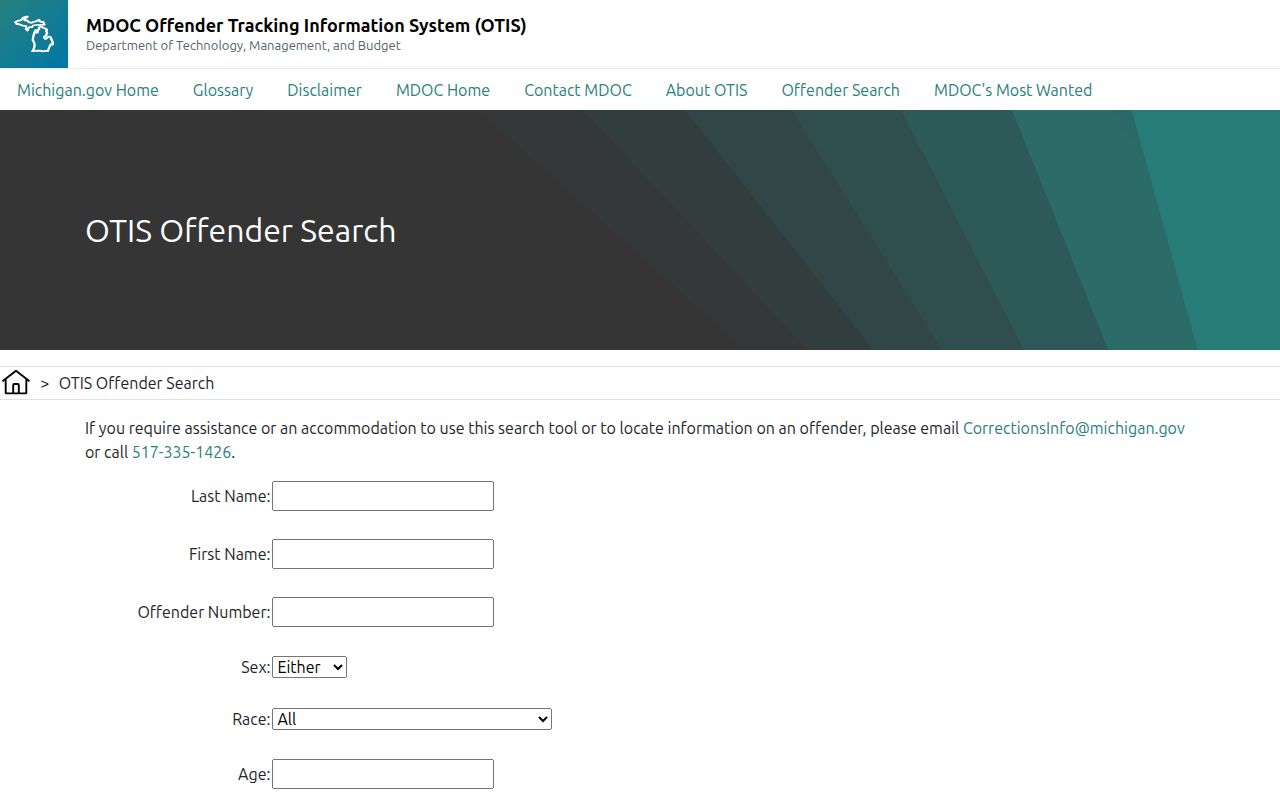
The OTIS form illustrates a state tool with its own identity fields and coverage limits, not a local household list.
Safe Marquette Resident Research
Michigan’s Address Confidentiality Program can substitute an address for qualifying participants. Voter information, vital records, court records, and motor-vehicle information also have separate protected fields and access rules. A missing result may reflect a coverage limit, a restricted record, a spelling difference, or an intentional protection. It is not a reason to probe around a custodian’s limits.
Use public records for a lawful personal purpose, keep source dates with every note, and confirm a consequential record with the custodian. Repeated pursuit, intimidation, or surveillance is not made acceptable because an index is public. Michigan’s anti-stalking statute, MCL 750.411h, remains the legal boundary for harmful conduct.