
Marquette City Directory Collections by Year
Marquette's historical shelf is broad enough to start with the year rather than a guess. Peter White Public Library keeps the extant Marquette city and county directory run from 1873 through 2005, while the J.M. Longyear Research Library reports directories from 1873 to the present. The two collections overlap in useful ways, but their access paths differ. Peter White supports general onsite use in its Local History Research Room. Longyear research is by appointment or advance contact, which makes a call ahead sensible when a specific town, street, or volume matters.
| Collection | Years | Where Held | Access |
|---|---|---|---|
| Beard's Directory and History of Marquette County | 1873 | Google Books, digitized from the University of Michigan | Selected-page preview; verify an entry in a readable copy |
| Early local city and county directories | 1873-1891 | Peter White Public Library and Longyear collections | Onsite historical research |
| R.L. Polk city and county directories | 1894-2005 | Peter White Public Library Local History Room | Onsite use with staff help available |
| Marquette city and county directories | 1873-present extant holdings | J.M. Longyear Research Library | Appointment or advance contact |
| County telephone directories | 1914-present | J.M. Longyear Research Library | Alphabetical by community |
The 1873 Beard's directory is a good early lead: it was published by Hadger & Bryce and has 240 pages. Its Google Books preview confirms the volume but did not reliably expose a full individual entry during research. Record the volume and page when a full scan is available instead of treating a search snippet as proof.
The source image from Peter White Public Library's local-history collection shows the research room that anchors historical Marquette research.
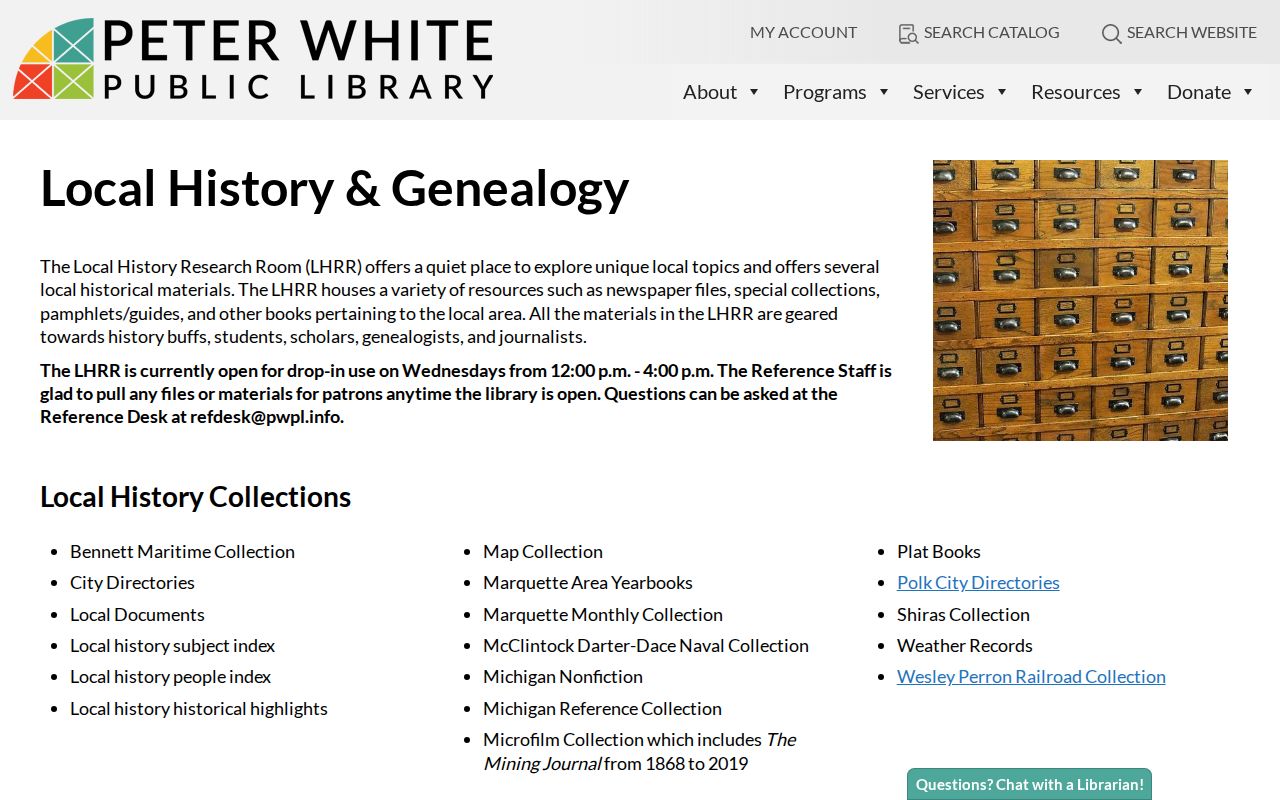
Onsite access matters because a librarian can bring a directory year, a local index, a map, and a newspaper reel into the same search.
Marquette Directory Publishers and Runs
The first four known local volumes, spanning 1873 through 1891, came from various local publishers. R.L. Polk & Co. begins with the 1894 run held at Peter White. That publisher change is worth noting in a research log because format, indexing style, and the information printed beside a name can shift with an edition. A missing name may reflect a different arrangement, a spelling change, or a household that was not printed in that issue. It does not settle a family question by itself.
For a statewide sense of what a printed directory can contain, the Library of Michigan directory guide describes surname, street, telephone, ownership, and reverse-format sections. Those are format clues, not a promise that every Marquette volume has each field. Ask which indexes appear in the exact year before setting a search plan.
Note: A directory date is a publication clue, while the information in it may have been gathered before printing and can lag a move.
Marquette Directory Help at Peter White
Peter White Public Library's Local History Research Room is at 217 N. Front Street in Marquette. Its local-history service brings together reference and genealogy books, subject and people indexes, maps, yearbooks, Polk volumes, microfilm, and digital collections. That mix is especially useful when a name appears in one annual Marquette directory but the next edition changes an address or leaves the person out. The room can turn that single line into a check against the local press or a school record without treating either one as a substitute for the other.
The Mining Journal adds a dated local record beside the printed lists. Peter White has microfilm from 1868 through 2019 and a digital run from 1868 through February 1989. The paper was weekly until June 1884, then added a daily edition while weekly issues continued through the end of 1885. Search both the likely spelling and the publication rhythm for an early notice. A digital miss is not conclusive because the Historical Center also holds newspaper files and indexes.
Reading a Marquette City Directory Entry
A line in a historical Marquette directory should be transcribed as it appears, then read field by field. The useful unit is more than a surname. Capture the page and year with the name, since an apparent address change can be an abbreviated street, a revised numbering convention, or a different person with the same name. The inventory below reflects fields documented for directory formats and local holdings. It does not claim that every volume printed every one.
| Surname and given name | Preserve initials, spelling variants, and the form printed in that volume. |
|---|---|
| Spouse or household detail | Copy it when printed, rather than assuming relationships from a shared address. |
| Occupation or business | Record the historical description and any business context the edition supplies. |
| Street and house number | Keep the address exactly as printed, along with the page, year, and publisher. |
| Edition-specific marks | Note owner/renter, telephone, widow, or household marks only where that volume uses them. |
- Criss-cross directory
- A format arranged by street and house number that can point to the head of household when a matching volume exists.
- Householder index
- A name list centered on a household lead, rather than a full list of every person at an address.
- Abbreviation key
- The explanation printed in the volume for its shortened terms and marks. Photograph or transcribe it before interpreting entries.
A Marquette-specific Bresser or criss-cross run was not located in the research. The state guide explains the format, but the safer local question is whether the staff can locate a street or reverse section for the target year.
Marquette Directory Research at Longyear
The J.M. Longyear Research Library at 145 W. Spring Street has more than directory shelves. Its city and county directory holdings begin in 1873 and are arranged by town and then name. The library also maintains county telephone directories from 1914 forward, a biographical card file with more than 80,000 names, and a photograph collection filed by street address. Research requires an appointment or advance contact, so describe the name, address, and date range before going.
The source image from the Marquette Regional History Center's research holdings shows the local collection that links a directory search to photographs, maps, and residence references.
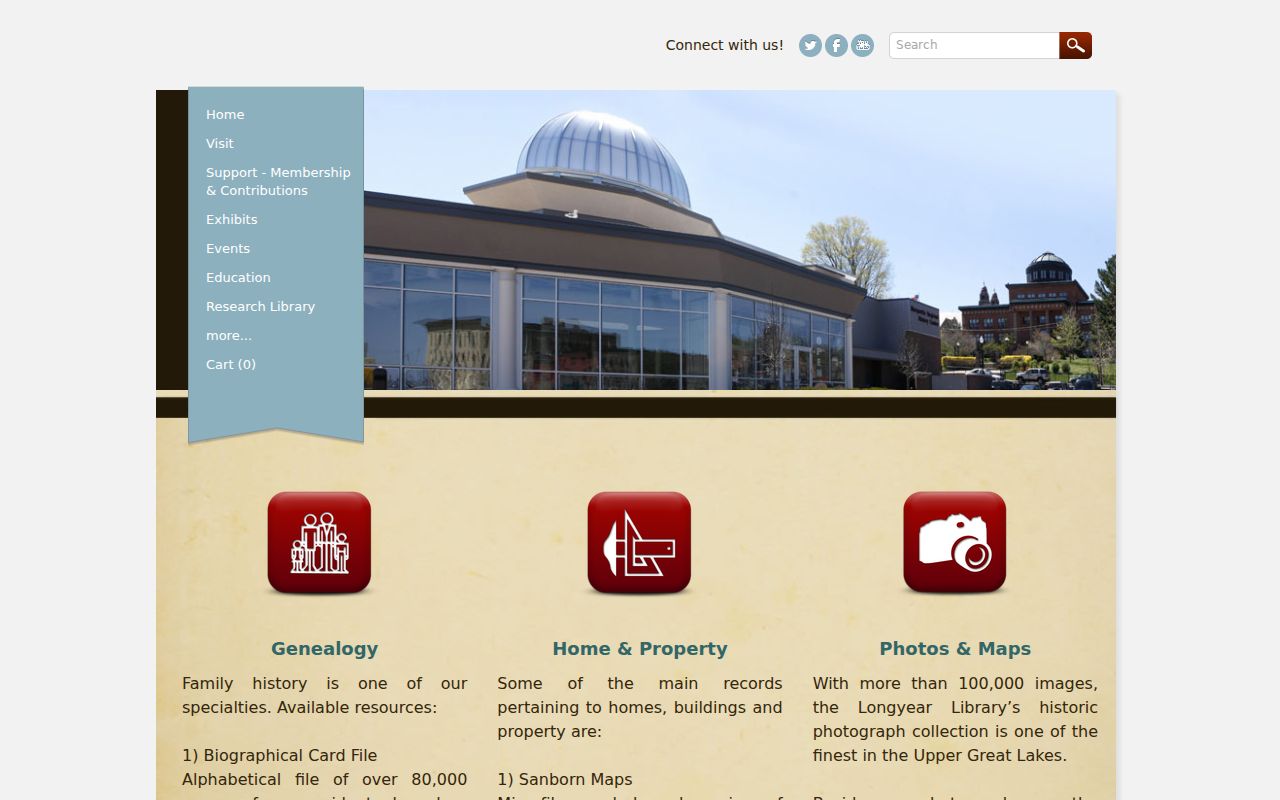
Longyear's Mining Journal residence index is organized by city and street, which can help locate a notice that explains why a directory line changes.
Marquette Directory Reverse Clues
It is tempting to read an alphabetical volume as a complete list of everyone who lived in town. That is not what an alphabetical directory establishes. Some volumes privilege heads of household, some include street or telephone sequences, and some have a different scope from the next year's edition. The strongest practice is to note the edition's format first, then use its surname and street paths for the question each path can answer.
Where a reverse section is present, start with the historical street form and house number, list each printed occupant or head of household, and then return to the surname section for spelling changes. A current-address investigation belongs with parcel and deed records; historical names and formats belong on the directory shelf. When a name needs a separately dated public-record check, the Marquette resident lookup route keeps that task distinct.
Marquette Directory Years and Census Dates
Annual directory entries and census schedules do different work. A directory can put a name close to a street and describe a historical business or telephone convention. A census can give household composition at a census date. Longyear holds Marquette County federal census microfilm for 1850, 1860, 1870, 1880, and 1900 through 1930, with the familiar federal 1890 gap. It also describes a rare 1864 Michigan state census that includes Marquette and Schoolcraft County residents, including Grand Island.
- Choose a directory year close to the event or move being researched and copy the entry with its page and publisher.
- Check the years immediately before and after it for an address, surname, or household change.
- Pair the closest federal census date with that sequence, using the census for the household rather than assuming a directory proves every family member.
- Use the Mining Journal, a cemetery source, or a biographical card to test whether a move, marriage, or death explains the change.
- Label each conclusion by source: directory entry, census household, newspaper notice, or recorded land party.
That source-by-source record is more reliable than turning a vanished name into a story. A name can disappear because of a move, death, spelling, printing decision, or incomplete volume.
Marquette Maps Beside the Directories
Directories become more useful when placed beside a map that dates the block, not the person. Peter White provides access to nine Marquette Sanborn maps covering 1884 through 1946. They can show building footprints, use, materials, streets, and lot context. They do not create a name list. Use a map to test whether an address or structure fits a directory period, then return to the dated name sources for people.
Yearbooks, church records, cemetery material, and regional digital collections offer other careful companions. Peter White links to Northern Michigan University's UPLINK repository for digitized regional material. Longyear holds local school yearbooks beginning around 1903 and several church and cemetery collections. Each supplies a different kind of evidence, so the exact source, date, and page remain part of the result.
Marquette Directory Scan Limits
The Beard's volume is valuable because it marks the beginning of the documented printed directory story in 1873. Its digital view is still a starting point, not a stand-in for a readable entry. The preview did not yield a dependable page-level individual listing in research, so no person or address should be attributed to that image without checking a complete page. That limit is a useful reminder for all scans: bibliographic metadata and a visible search term are not the same as a transcribed record.
The Google Books view of Beard's Directory is the source for this early Marquette historical-directory image.
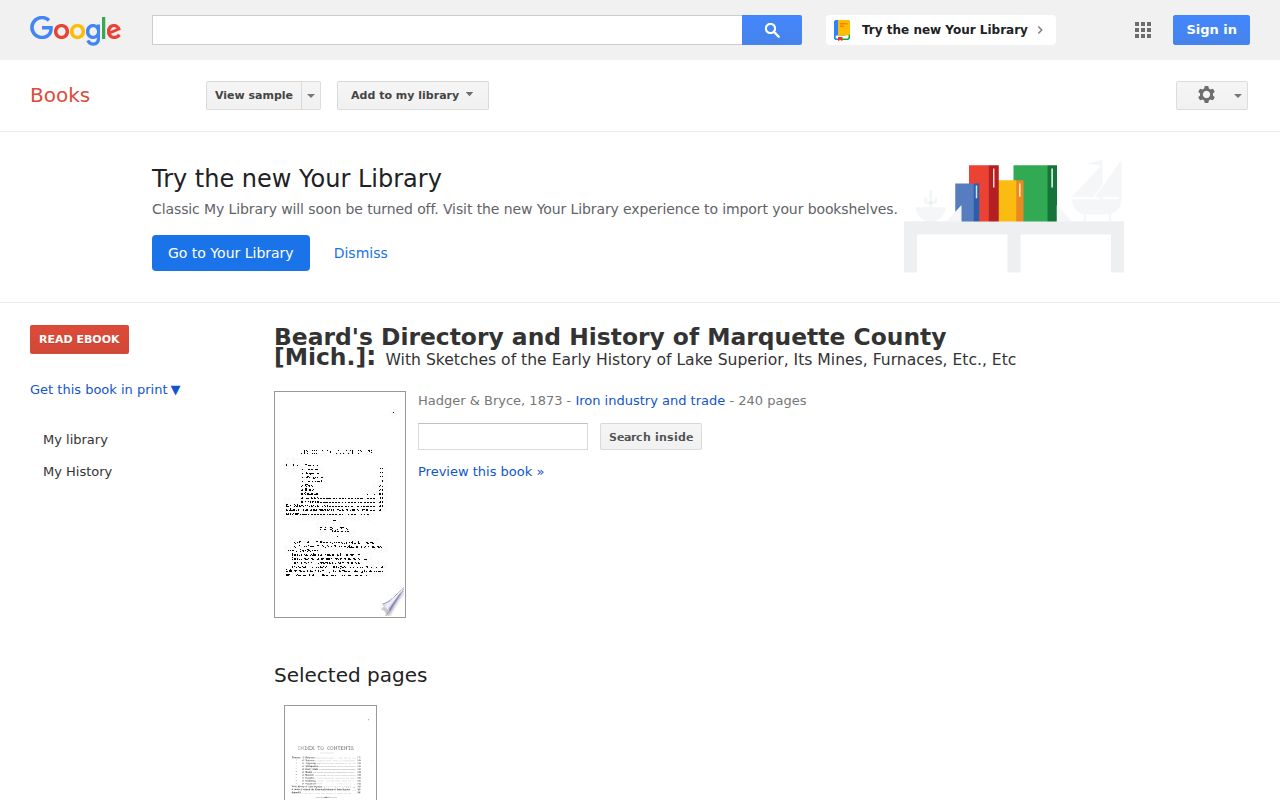
The image supports the title and edition context, while a legible page remains necessary for a person-by-person citation.
Marquette Digitization May Expand Access
Local collections are not fixed. The Historical Society of Michigan announced 2026 digitization days at the Marquette Regional History Center and Ishpeming Carnegie Public Library, with scans intended for Longyear digital collections. The events may expand access to family papers, photographs, and local records over time. Check the Historical Center catalog and digital holdings again for a target name or street, but do not assume a particular directory or photograph has been added until it appears in the collection.
Note: The best Marquette directory citation includes the year, publisher, page, repository, and a separate note for any newspaper or census comparison.